Introduction
Automobiles have always been a symbol of human ambition. From Henry Ford’s assembly line to Tesla’s software-defined vehicles, the journey of mobility has consistently mirrored technological evolution. Today, that journey has entered a fascinating new phase; one powered by digital transformation, where engineering is no longer confined to clay models, factory floors, or physical crash labs.
Instead, automotive innovation increasingly begins inside an immersive digital environment, where designers can sculpt a car in virtual space, engineers can test aerodynamics before a prototype exists, and technicians can rehearse assembly procedures without touching a single component.
This is where cutting-edge technology like AR VR technology is rewriting the rules.
For the automotive and electric vehicle sectors, the stakes are particularly high. EVs are not merely traditional cars with batteries swapped in. They demand entirely new design philosophies: battery architecture, thermal efficiency, lightweight construction, smart dashboards, and connected ecosystems. Traditional development methods are often too slow and expensive for this pace of change.
Augmented Reality (AR) and Virtual Reality (VR) are emerging not as experimental tools, but as essential engineering assets.
What Is AR and VR?
Before examining their industry-wide impact, it helps to understand the distinction.
Augmented Reality (AR) overlays digital information onto the real world. Think of a technician wearing smart glasses that project repair instructions directly onto an engine, or a driver seeing navigation arrows appear on the windshield.
Virtual Reality (VR), on the other hand, creates a fully immersive digital environment, replacing physical surroundings with simulated spaces users can interact with.
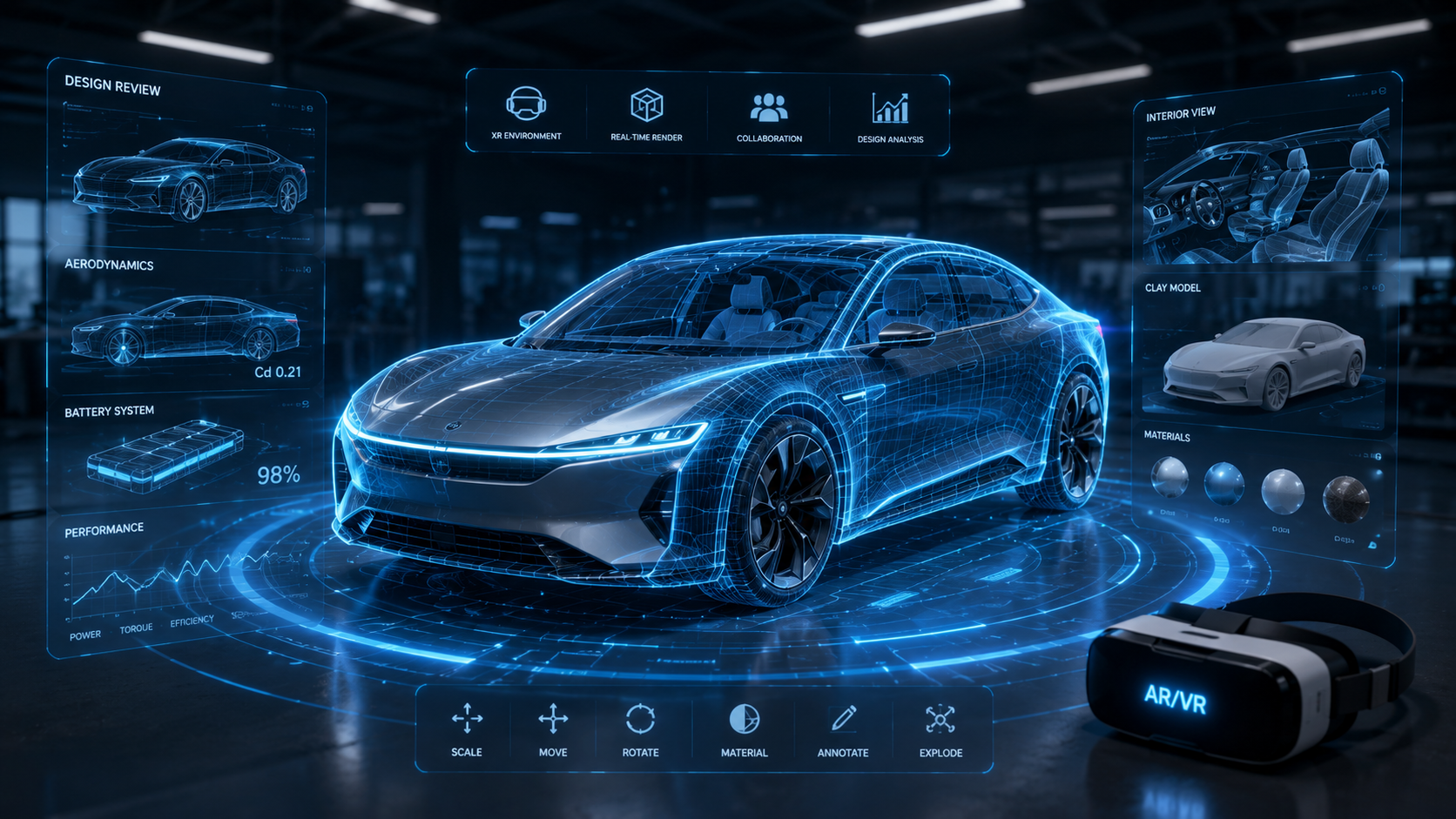
For the automotive industry, both technologies serve different yet complementary roles. VR has become indispensable in Virtual Prototyping, allowing engineers to walk around full-scale vehicle models, inspect interiors, and test ergonomics long before manufacturing begins. AR, meanwhile, bridges digital intelligence with real-world execution making factory workflows smarter, safer, and more efficient. Together, they redefine prototyping, transforming design from a physical exercise into an iterative digital process.
The Role of AR and VR in Transforming the Automotive Industry
The automotive sector is undergoing one of the most significant shifts in its history. Electrification, automation, AI-driven mobility, and connected vehicles are accelerating automotive digital transformation. AR and VR sit at the centre of this reinvention.
Faster Digital Product Development
Traditional automotive development relied heavily on physical prototypes, each iteration costing substantial time and money.Today, digital product development allows manufacturers to simulate:
- Aerodynamics
- Cabin ergonomics
- Battery placement
- Thermal performance
- Crash scenarios
This dramatically shortens innovation timelines.
Smarter Training Experiences
Training technicians in EV assembly or advanced diagnostics can be expensive and risky. AR-powered training experiences allow workers to learn procedures interactively.Using AR glasses / Smartphones, trainees can receive visual overlays showing:
- Component placement
- Wiring paths
- Torque sequences
- Safety alerts
Learning becomes faster, safer, and far more engaging.
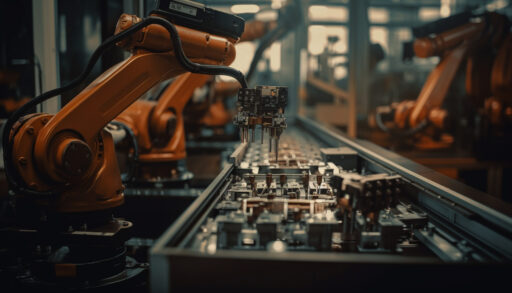
Enhancing Automotive Manufacturing with VR and AR
Manufacturing has always been a choreography of precision. AR and VR now act as digital conductors.
Reduced Design Cycles
Shorter design cycles are perhaps the most immediate advantage. Instead of building multiple expensive prototypes, engineers can test dozens of design variations in VR within days. A dashboard redesign that once took weeks can now happen in hours.
Virtual Design and Prototyping
Virtual Design / Prototyping enables engineers to:
- Explore structural changes instantly
- Simulate assembly line feasibility
- Detect ergonomic issues early
- Identify manufacturing bottlenecks
This is especially critical in EV production, where battery packaging significantly affects performance and safety. Manufacturers are no longer merely designing vehicles. They are designing systems.
AR in Smart Driving and EV Safety Features
Perhaps the most consumer-visible use of AR lies inside the vehicle itself. Modern cars are becoming intelligent interfaces.
Driver Assistance Systems
Advanced Driver Assistance Systems increasingly use Augmented Reality (AR) to improve decision-making.
Examples include:
- Navigation projected onto windshields
- Lane guidance overlays
- Hazard alerts in driver view
- Parking assistance with AR visualisation
Rather than forcing drivers to glance between road and dashboard, AR brings critical data directly into sight.
EV Safety
EV Safety introduces unique concerns:
- Battery overheating
- Thermal runaway risks
- Charging diagnostics
- High-voltage system awareness
AR-based diagnostic systems can help technicians identify fault zones visually, reducing risk during maintenance. For drivers, AR interfaces may eventually provide predictive safety warnings based on vehicle behaviour.
VR for Automotive Design, Prototyping, and Team Collaboration
Vehicle development is rarely the work of a single department. Designers, engineers, UX specialists, battery experts, manufacturing planners all must collaborate seamlessly. VR transforms this process.
Real-Time Collaborative Engineering
Using real-time collaborative tools, global teams can enter shared virtual environments to inspect vehicle concepts together. A design lead in Munich, an EV systems engineer in Bengaluru, and a manufacturing expert in Detroit can interact with the same model simultaneously. No flights required.
Better Digital Prototypes
Unlike static CAD renders, digital prototypes in VR allow:
- Human-scale inspection
- Functional interaction
- Ergonomic simulation
- Material evaluation
Design becomes experiential, not abstract.
The Future of AR/VR in the Automotive and EV Industry
The next decade will push these technologies even further. The automotive industry is likely to integrate AR and VR deeper into every stage of the product lifecycle.
Predictive Maintenance
One of the most promising frontiers is Predictive Maintenance. Imagine service technicians wearing AR headsets that instantly diagnose battery degradation, identify component wear, and recommend corrective action. Combined with IoT and AI, maintenance shifts from reactive repair to intelligent prevention.
Fully Immersive Design Ecosystems
The future of VR and AR may include:
- AI-assisted design simulations
- Digital twin ecosystems
- Autonomous driving visual modelling
- Virtual customer test drives
- Remote manufacturing audits
What feels futuristic today may become operational standard tomorrow.
Conclusion: The Next Step in Automotive Transformation
Few technologies have altered automotive engineering as profoundly as VR and AR technologies. They are no longer novelty tools reserved for innovation labs. They are practical enablers of faster automotive design, smarter manufacturing, improved safety, and accelerated EV development. As the industry embraces electrification and intelligent mobility, these tools become less optional and more foundational. The true power of this transformative technology lies not merely in visualisation, but in decision-making. The automotive companies that lead tomorrow will be those willing to build today inside immersive digital worlds. Because the future of mobility may begin not on the road, but in virtual space.
Frequently Asked Questions:
What are the key features of AR and VR?
AR and VR create immersive digital experiences that enable interactive simulations, real-time collaboration, virtual training, and digital visualisation for faster and smarter decision-making.
What are the benefits of AR and VR in the automotive industry?
These technologies reduce development costs, speed up prototyping, improve manufacturing accuracy, enhance technician training, and strengthen vehicle safety and EV innovation.
How are AR and VR used in the automotive industry?
AR and VR are used in vehicle design, virtual prototyping, manufacturing simulation, technician training, diagnostics, and smart in-car navigation and safety systems.
How do automotive companies use AR and VR technologies?
Automotive companies use AR and VR for immersive design reviews, engineering simulations, assembly guidance, virtual showrooms, and smarter maintenance workflows.
How is AR/VR transforming automotive design and the EV industry?
AR/VR is replacing traditional development methods with faster digital workflows, enabling smarter design, safer EV testing, improved collaboration, and accelerated innovation.