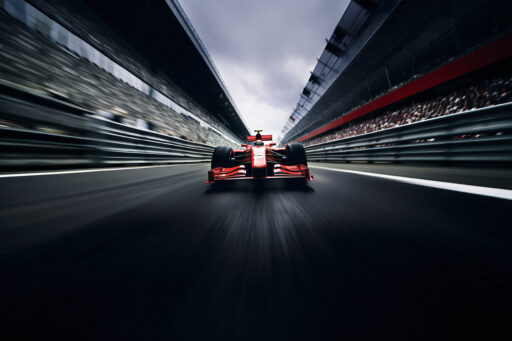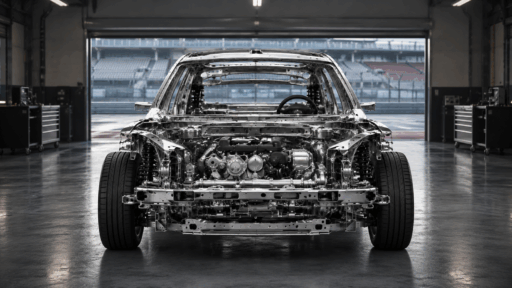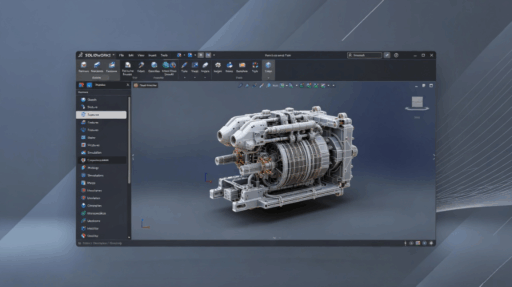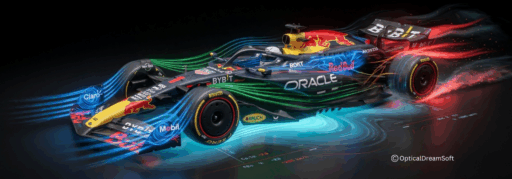
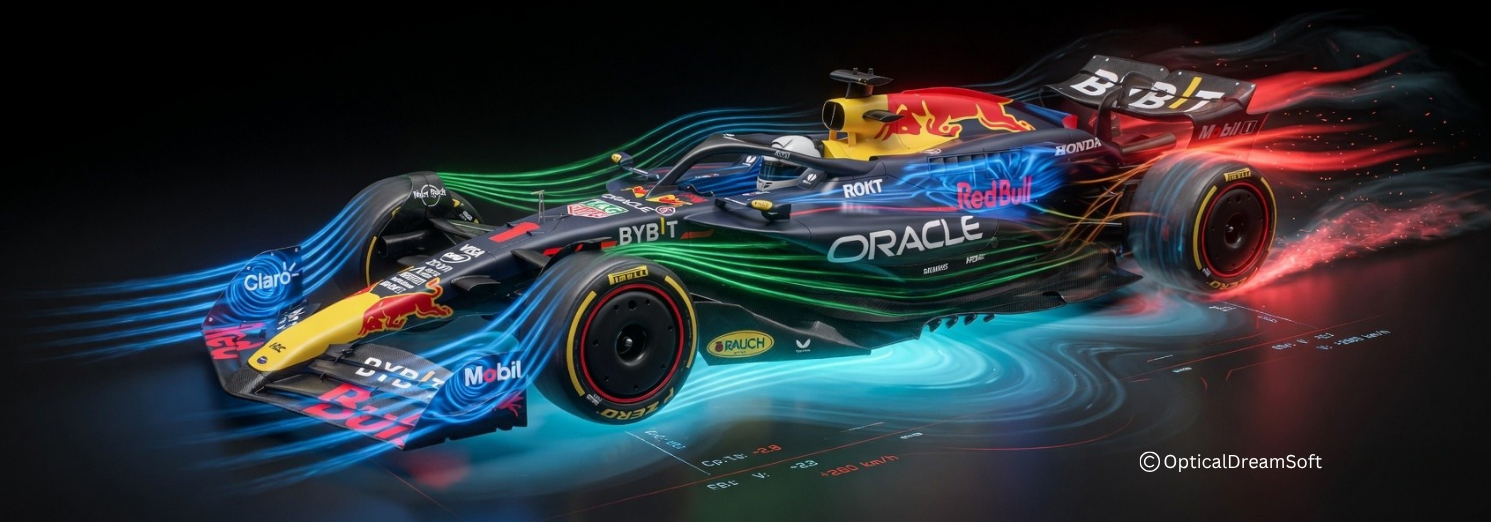
The RB20 season stands as one of the most compelling modern examples of how even elite teams can encounter fundamental engineering breakdowns. A deep red bull rb20 analysis with CATIA application and automobile design engineering insights reveals that the challenge was not a lack of innovation, but a disconnect between simulation, aerodynamic intent, and real-world validation. In today’s era of formula 1 car development, where precision defines performance, even minor mismatches in correlation can cascade into major competitive setbacks. This case ultimately became a benchmark in f1 engineering explained with CATIA and AI-guided modelling, demonstrating how digital tools must align with physical reality.
Introduction – The RB20 Controversy Explained
The RB20 was introduced with an aggressive aerodynamic philosophy centered on maximizing underfloor performance through extreme packaging. Red Bull pushed the boundaries of underfloor aerodynamics, aiming to extract more efficiency from airflow beneath the car. However, this bold direction quickly exposed rb20 aerodynamic issues in automobile design engineering, raising critical concerns about why red bull struggled F1 despite its dominant legacy. The root cause of these rb20 development issues was not purely design-related, but deeply tied to how simulation data failed to translate into consistent on-track performance.
Understanding Modern F1 Aerodynamics
Modern Formula 1 aerodynamics has evolved significantly, with ground effect F1 now contributing nearly half of a car’s total downforce. This shift has redefined how engineers approach performance, with airflow beneath the car becoming more critical than traditional aerodynamic surfaces. The concept of F1 downforce explained today revolves around pressure differentials generated through carefully sculpted tunnels, often
developed using venturi tunnels F1 airflow modeling in CATIA. This transformation means that the floor is no longer just a component, but the primary driver of aerodynamic efficiency.
Ground Effect & Underfloor Physics
At the core of this aerodynamic philosophy lies ground effect aerodynamics, which relies heavily on the bernoulli principle in racing vehicle airflow design and the venturi effect explained through accelerated airflow under the chassis. These principles create powerful low-pressure zones, generating significant underfloor downforce. However, the complexity of F1 floor design introduces extreme sensitivity, where even slight variations in ride height or airflow conditions can destabilize the entire aerodynamic platform.
Aero Efficiency vs Drag Tradeoff
In Formula 1, achieving optimal performance requires balancing drag vs downforce, a relationship that directly impacts both straight-line speed and cornering capability. Engineers refine the aerodynamic efficiency Formula in automobile design to achieve a low drag high downforce car, but pushing this balance too aggressively can compromise stability. The RB20 exemplified this challenge, as its pursuit of peak efficiency resulted in a narrow operating window that made consistent performance difficult.
Aero Balance & Car Stability
A well-performing F1 car depends on precise aerodynamic distribution, often described through F1 car balance explained in terms of front-to-rear load. When this balance is disrupted, it leads to aerodynamic instability F1, which can manifest in unpredictable handling and reduced driver confidence. The RB20 exhibited signs of porpoising Formula 1, along with extreme sensitivity to setup changes, making car setup aerodynamics exceptionally difficult to manage across varying track conditions.
What Went Wrong With the RB20
The primary failure of the RB20 was a classic F1 car correlation problem, where simulation outputs failed to match real-world performance. Despite extensive modeling and a detailed Red Bull RB20 technical analysis using CATIA simulation workflow, the team encountered issues with wind tunnel correlation, leading to misleading data. As a result, several updates resulted in F1 upgrade failure, compounding the problem rather
than resolving it. This highlighted the critical importance of accurate validation in high-performance engineering.
Aggressive Packaging & Cooling Layout
Red Bull’s design approach included an extremely tight F1 sidepod design, aimed at improving airflow efficiency around the car. This required advanced cooling packaging Formula 1 strategies and optimized radiator placement F1, all integrated within a compact structure. While theoretically beneficial, this aggressive packaging disrupted airflow consistency, particularly around the sidepod undercut airflow, contributing to the instability observed on track.
Wind Tunnel vs CFD Correlation Failure
The RB20’s struggles also exposed limitations in cfd vs wind tunnel alignment. While computational fluid dynamics racing allows engineers to simulate airflow with high precision, it cannot fully replicate real-world conditions. Physical validation through f1 wind tunnel testing remains essential, and in this case, discrepancies led to a significant aerodynamic correlation error. This gap between simulation and reality became one of the defining issues of the car’s performance.
Driver Feedback & Driveability Issues
From the driver’s perspective, the RB20 suffered from poor F1 car drivability, driven by extreme aerodynamic sensitivity car characteristics. The car’s behavior was inconsistent, making it difficult to maintain a stable race car handling balance. These issues were further amplified by high setup sensitivity Formula 1, where small adjustments led to disproportionate changes in performance, limiting the team’s ability to extract consistent results.
How Red Bull Fixed the Aero Nightmare
The recovery process was rooted in a structured aerodynamic upgrade strategy that emphasized validation over experimentation. By refining their approach within a disciplined motorsport engineering workflow, Red Bull focused on aligning simulation data with real-world performance. This method reflects best practices in automotive product development, where iterative improvements often yield more reliable results than radical redesigns.
Data-Driven Development Loops
A key part of the turnaround involved implementing simulation driven design supported by a continuous engineering feedback loop. By improving performance correlation engineering, the team ensured that every development step was validated against track data. This approach reduced uncertainty and restored confidence in both simulation tools and design decisions.
Track Data + Simulation Integration
The integration of telemetry analysis motorsport with simulation models played a crucial role in resolving the RB20’s issues. By leveraging real-time race data engineering and detailed vehicle performance analysis, engineers were able to identify discrepancies and correct them effectively. This alignment between digital and physical systems ultimately closed the correlation gap.
Incremental vs Radical Innovation
The RB20 highlighted the importance of balancing engineering iteration vs innovation. While bold concepts can unlock new performance gains, they also introduce significant design risk engineering. Sustainable success in Formula 1 depends on a well-managed product evolution strategy, where improvements are introduced progressively and validated at each stage.
Engineering Lessons for Future F1 Engineers
For those pursuing a motorsport engineering career, the RB20 serves as a critical learning opportunity. Success in this field requires strong aerodynamics engineering skills, a deep understanding of the race car design process, and proficiency in advanced tools like CATIA. As engineering becomes increasingly data-driven, the integration of AI and simulation will play a defining role in shaping future expertise.
Lesson 1 – Correlation Matters More Than Innovation
The RB20 demonstrates that without a robust engineering validation process, even the most innovative designs can fail. Accurate prototype validation engineering ensures that
simulation results translate into real-world performance, making correlation a cornerstone of successful engineering.
Lesson 2 – Aero Is a System, Not a Component
Modern F1 cars require a holistic systems engineering approach, where aerodynamics is integrated with mechanical and thermal systems. Effective multidisciplinary engineering design ensures that all components work together seamlessly, reinforcing the idea that performance is the result of interconnected systems rather than isolated elements.
Lesson 3 – Data Beats Assumptions
The shift toward data-driven engineering emphasizes the importance of engineering data analysis and rigorous simulation verification validation. In a sport where margins are minimal, decisions must be based on validated data rather than intuition, reinforcing the role of analytics in modern performance engineering.
Conclusion – What RB20 Means for Next-Gen F1 Cars
The lessons from the RB20 will significantly influence the future of Formula 1 aerodynamics and AI driven design, particularly as teams prepare for evolving regulations such as the F1 2026 regulations aero. The next generation of cars will rely more heavily on integrated systems, advanced simulations, and adaptive engineering strategies, shaping the evolution of next generation race cars.