Introduction
Consumer expectations are changing rapidly, driving manufacturers to create products that are not only functional but also innovative, sustainable, and visually appealing. As technology transforms product development, plastic product design plays a crucial role in creating lightweight, durable, and cost-effective consumer goods. Understanding the latest design trends helps businesses stay competitive while opening exciting opportunities for aspiring product designers.
Why Plastic Product Design Is Evolving So Quickly
Innovation in plastic component design is driven by changing consumer expectations, faster product launches, and increasing competition across industries. Manufacturers are looking for solutions that improve product quality while shortening development cycles and controlling manufacturing costs.
The adoption of digital manufacturing has transformed product development by allowing engineers to create virtual models, evaluate designs, and identify improvements before production begins. Companies are also investing in sustainable product design by selecting environmentally responsible materials and optimizing product structures to minimize environmental impact. Another important objective is achieving a lower cost of production. Better design decisions, efficient material usage, and early design validation help reduce manufacturing expenses while maintaining product quality and performance.
Sustainable Plastic Design
Sustainability has become a key focus in modern product development as manufacturers work towards reducing their environmental footprint. The use of recyclable plastics allows products to be recovered and reused more effectively, supporting circular economy initiatives and responsible manufacturing practices.
Designers also focus on optimizing product geometry and manufacturing processes to reduce plastic waste without affecting product strength or functionality. Material optimization not only benefits the environment but also improves manufacturing efficiency. By adopting sustainable product design, organizations can meet environmental regulations while delivering products that align with growing consumer expectations for eco-friendly and responsible manufacturing.
Smarter Product Development with CAD, CAE, and Simulation
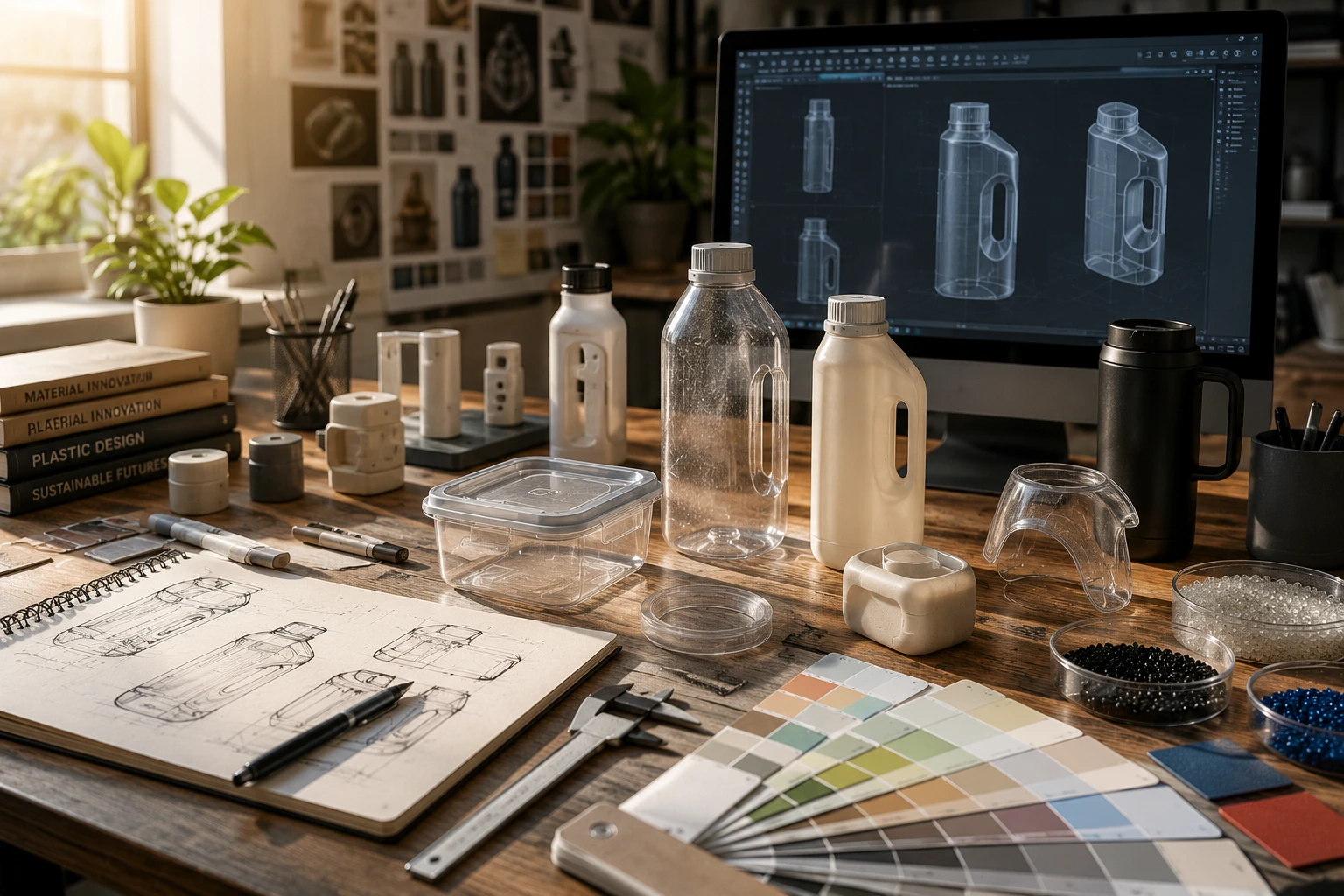
Digital engineering tools have transformed the way plastic products are designed and tested. CAD software helps engineers develop accurate 3D models, while CAE tools evaluate product performance before manufacturing begins, reducing the need for multiple physical prototypes.
One of the most widely used solutions for plastic product development is SOLIDWORKS Plastics. The software enables engineers to perform mold flow analysis, helping predict how molten plastic fills a mold and identify potential manufacturing issues before tooling is created.
Simulation-driven product development also plays an important role in reducing production costs by minimizing design changes, reducing material waste, and improving manufacturing efficiency. These technologies enable companies to deliver high-quality products faster while maintaining consistent production standards.
Advanced Plastic Materials Are Replacing Traditional Materials
Material innovation has significantly improved the performance of plastic products across industries. Manufacturers are increasingly using engineering plastics because they offer better strength, heat resistance, durability, and lightweight properties compared to conventional materials. These advanced plastics help improve product performance while supporting efficient manufacturing.
Selecting the right material is an important part of material selection. Designers evaluate factors such as product function, operating conditions, manufacturing methods, and cost before choosing a suitable material. The right material not only enhances product quality but also contributes to longer product life and improved customer satisfaction.
Automation and Smart Manufacturing
Automation is transforming plastic product manufacturing by making production faster, more accurate, and highly efficient. Modern factories use automated production lines to handle molding, assembly, quality inspection, and packaging with minimal manual intervention.
Automation helps manufacturers improve productivity by reducing production time, maintaining consistent quality, and minimizing machine downtime. Smart manufacturing systems also optimize material usage and process control to reduce material waste, helping organizations improve sustainability while lowering operational costs.
3D Printing Is Accelerating Plastic Product Innovation
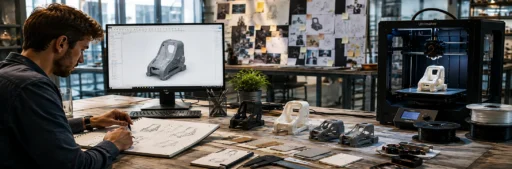
The adoption of 3D printing has changed the way plastic products are developed. Engineers can quickly create prototypes, test designs, and make improvements before investing in production tooling. This shortens development cycles and reduces project risks.
One of the biggest advantages of additive manufacturing is rapid prototyping, which allows designers to evaluate product dimensions, functionality, and assembly before mass production. Faster design validation enables manufacturers to introduce innovative products to the market more efficiently while reducing development costs.
AI Is Transforming Plastic Product Design
Artificial Intelligence is helping engineers improve product development by analyzing design alternatives and identifying optimization opportunities. AI in product design enables faster decision-making, better product performance, and more efficient use of materials.
Another emerging technology is generative design, where engineers define design objectives and manufacturing constraints while AI generates multiple optimized design solutions. This approach helps reduce unnecessary material usage, improve product performance, and accelerate innovation throughout the design process.
Plastic Product Design Trends Across Different Industries
Plastic product design continues to play an important role across multiple industries. Consumer electronics manufacturers use lightweight plastic components to improve product durability and appearance, while the automotive industry relies on advanced plastics to reduce vehicle weight and improve efficiency.
Medical devices, packaging, home appliances, toys, and industrial products also benefit from continuous advancements in plastic product design. As industries continue adopting digital technologies and sustainable manufacturing practices, the demand for innovative plastic products and qualified product designers is expected to grow.
What Competencies Do Plastic Product Designers Need Today?
Modern plastic product development requires designers to combine technical knowledge with practical problem-solving abilities. A strong understanding of injection molding helps professionals develop products that are easy to manufacture while maintaining quality and performance. Applying design for manufacturing principles also enables designers to simplify production, reduce costs, and improve product reliability.
A successful product design engineer should be familiar with CAD software, material selection, product development workflows, and manufacturing processes. Knowledge of mold flow analysis helps identify potential molding issues before production begins, reducing design revisions and improving product quality. Continuous learning and exposure to new technologies enable designers to stay competitive in the evolving manufacturing industry.
How Learning Plastic Product Design Can Build Your Career
The increasing demand for innovative consumer products has created excellent opportunities for professionals in product development. Enrolling in a plastic product design course helps learners understand every stage of the design process, from concept development and material selection to digital modeling, simulation, and manufacturing.
Industry-oriented training provides hands-on experience with modern design software and engineering practices used by manufacturers. With the right technical foundation and practical exposure, learners can build a rewarding product design career across industries such as consumer goods, automotive, electronics, medical devices, packaging, and industrial manufacturing.
Conclusion
Modern manufacturing continues to transform plastic product design through advancements in digital engineering, automation, sustainable materials, artificial intelligence, and additive manufacturing. These innovations are helping the consumer goods industry develop products that are smarter, more efficient, and environmentally responsible. For aspiring designers, building expertise in modern product development technologies can create exciting opportunities for a successful career in product design.
Frequently Asked Questions
1. What is plastic product design?
Plastic product design is the process of developing plastic products and components that are functional, aesthetically appealing, and suitable for manufacturing. It includes concept development, material selection, CAD modelling, simulation, prototyping, and production planning.
2. Is plastic product design a good career?
Yes. Plastic product design offers career opportunities across industries such as consumer goods, automotive, electronics, medical devices, packaging, and manufacturing. The growing need for innovative products continues to increase the demand for qualified product designers.
3. What are the latest plastic product design trends?
Current trends include sustainable product design, engineering plastics, digital manufacturing, AI-assisted product development, generative design, rapid prototyping through 3D printing, automation, and smart manufacturing.
4. What software is commonly used for plastic product design?
Plastic product designers commonly use SOLIDWORKS, SOLIDWORKS Plastics, CATIA, Creo, and other CAD and CAE software. CADD Centre’s Certificate in Plastics Design for Consumer Goods provides hands-on training in industry-relevant software, helping learners gain practical experience in product design and development.
5. What industries use plastic product design?
Plastic product design is widely used in consumer goods, automotive, consumer electronics, medical devices, packaging, home appliances, furniture, toys, and industrial manufacturing.
6. Why choose CADD Centre’s Certificate in Plastics Design for Consumer Goods?
CADD Centre’s Certificate in Plastics Design for Consumer Goods combines practical learning with industry-relevant software, project-based training, and engineering concepts. The program covers product design, material selection, injection molding, mold flow analysis, and design for manufacturing, preparing learners for careers in modern product development.