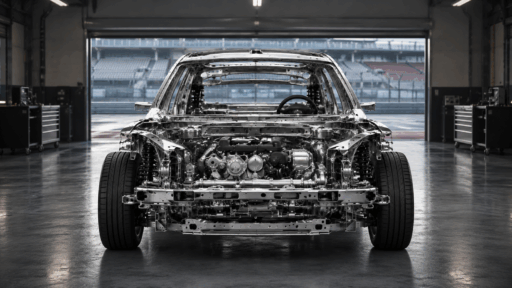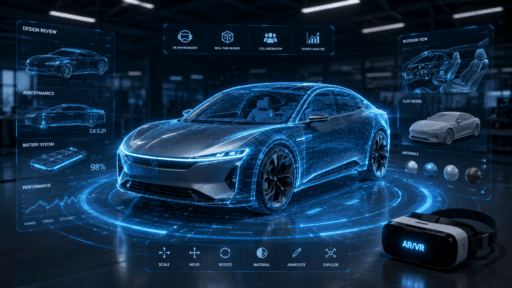
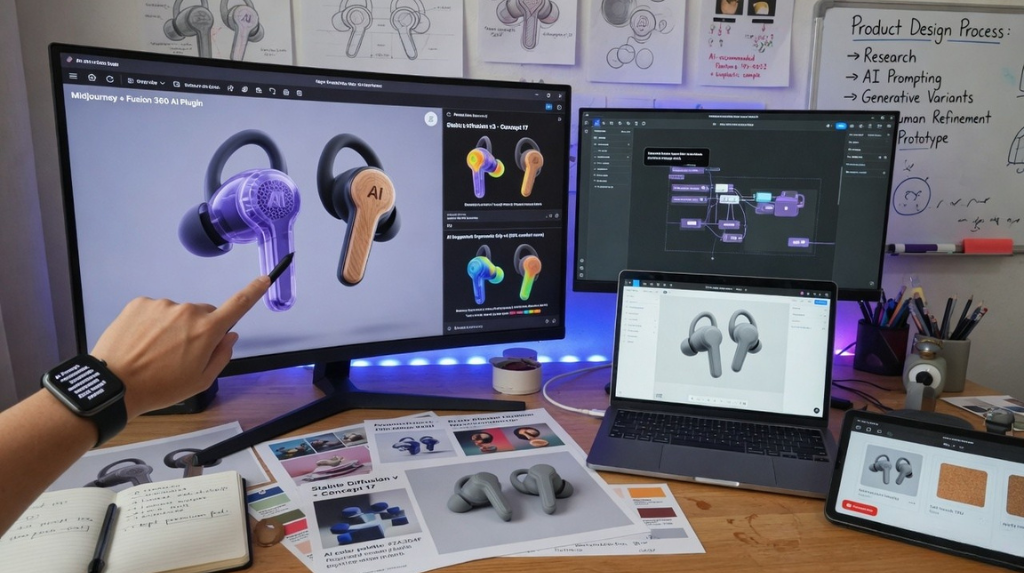
Product design has evolved from manual, sequential workflows into intelligent, data-driven systems. The integration of AI in product design has fundamentally restructured engineering processes in 2026. Today, AI in CAD design enables automation across modelling, simulation, and optimization, allowing engineers to operate within highly integrated, multi-stage workflows.
According to McKinsey (2024), AI can reduce product development time by up to 50%, while Deloitte (2025) reports a 20–30% faster time-to-market among organizations adopting AI-enabled design systems. These metrics signal structural transformation in engineering practice.
This article examines how AI improves efficiency, reduces development timelines, and enhances design outcomes. It evaluates the transition from traditional to AI-driven design, analyses leading tools, and presents industry-backed insights. The findings indicate that AI-enabled systems significantly improve productivity, reduce costs, and enable scalable innovation.
Why AI is Important in Modern Product Design
Traditional product design follows a linear, iterative approach where each stage depends on the previous one. This results in longer development cycles, higher prototyping costs, and limited design exploration.
AI transforms this paradigm by enabling parallel computation and simulation. Engineers can now generate and evaluate multiple design alternatives simultaneously. This capability enhances both speed and decision quality.
For instance, Autodesk (2024) reports that generative design can reduce product weight by up to 40% while maintaining structural integrity. This directly improves performance, sustainability, and material efficiency. Additionally, AI reduces dependency on physical prototyping, significantly lowering development costs.
Top AI Tools Transforming Product Design in 2026
1) Autodesk Fusion 360 (Generative Design)
Autodesk Fusion 360 is a leading AI-powered CAD platform known for its generative design capabilities. Engineers can input constraints such as load conditions, materials, and manufacturing processes. The system then generates multiple optimized design iterations based on these parameters.
A key advantage lies in design exploration engineers are no longer limited to a single solution path. Instead, they can evaluate a spectrum of performance-optimized geometries. This is particularly valuable in aerospace, automotive, and industrial design.
NASA-backed studies show that generative design components can be 30–50% lighter than traditionally designed parts while maintaining required strength, making Fusion 360 a critical tool for performance-driven engineering.
2) Siemens NX (AI-Powered Engineering)
Siemens NX integrates AI-driven engineering design with advanced simulation and validation capabilities. It is widely used in high-precision industries such as automotive and aerospace. The platform enables predictive modelling, automated validation, and real-time simulation feedback. This reduces design errors early in the development cycle and improves overall accuracy.
Siemens reports up to a 25% improvement in design efficiency and a significant reduction in rework through AI-assisted modelling. Its strength lies in combining CAD, CAM, and CAE into a unified intelligent system.
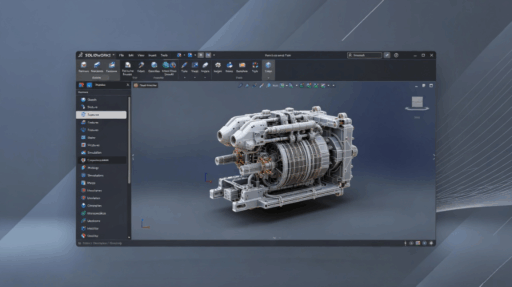
3) SolidWorks with AI Features
SolidWorks continues to be one of the most widely adopted product design tools, now enhanced with AI-driven features. These include design auto
mation, predictive modelling assistance, and intelligent feature recognition.
AI in SolidWorks streamlines repetitive tasks such as parametric adjustments, assembly validation, and design corrections. Engineers benefit from faster modelling cycles and reduced manual intervention.
Additionally, SolidWorks integrates simulation tools that allow real-time performance testing, enabling engineers to optimise designs during the modelling phase itself.
Dassault Systèmes (2024) reports that automation within SolidWorks reduces repetitive design tasks by approximately 30%, significantly improving workflow efficiency and productivity.
4) AI Visualization & Concept Tools
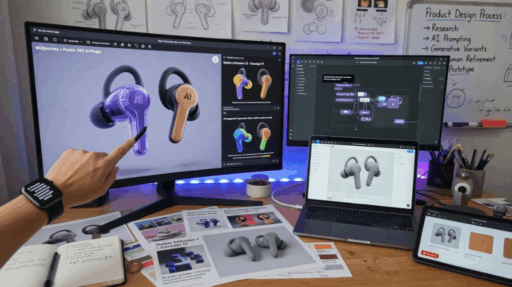
AI-based visualization platforms play a critical role in early-stage design. These tools generate visual prototypes from minimal inputs such as sketches, prompts, or rough models.
They enable rapid concept iteration, allowing designers to explore multiple aesthetic and functional directions quickly. This reduces the time required for ideation and improves collaboration between design and engineering teams. Adobe (2025) reports up to a 60% reduction in concept creation time using AI-assisted design systems, making these tools essential for accelerating the front-end design process.
5) PROME.AI (AI Rendering)
PROME.AI is an advanced AI rendering tool used for generating high-quality, photorealistic product visuals. It significantly enhances product visualization workflows by converting basic models into detailed renders within minutes.
This capability is particularly valuable for client presentations, marketing previews, and approval cycles. Designers can communicate design intent more effectively without investing excessive time in manual rendering.
By reducing rendering time and improving visual quality, PROME.AI accelerates decision-making and shortens product development cycles.
Real-World Applications of AI Tools in Product Design
AI is actively transforming multiple engineering domains:
- Automotive Industry: AI enables the design of lightweight components, improving fuel efficiency and performance. Companies use generative design to optimise chassis and structural parts.
- Aerospace Engineering: Complex geometries created through AI are used in aircraft components, reducing weight while maintaining strength.
- Industrial Machinery: AI improves precision in machine components, reducing defects and enhancing durability.
- Consumer Products: AI-driven tools accelerate product iterations, enabling faster innovation cycles.
A notable example includes companies using SolidWorks simulation to design high-performance consumer products such as ergonomic wearables and precision tools. These designs achieve superior performance through AI-assisted optimisation and testing.
PwC (2025) reports that AI reduces manufacturing errors by up to 20%, directly improving product reliability and quality.
How Engineers Use AI Tools in Real Projects
AI tools are embedded across the entire product development lifecycle:
- Concept Generation: AI tools generate multiple design concepts based on constraints
- Modelling: Automated CAD modelling reduces manual workload
- Simulation: Real-time testing predicts performance outcomes
- Optimization: AI refines designs for weight, cost, and efficiency
AI reduces manual effort while improving decision accuracy. This leads to better cost control and enhanced design optimisation.
Boston Consulting Group reports that AI can reduce engineering costs by 15–25%, making it a critical enabler of operational efficiency.
Benefits of AI Tools in Product Design
AI adoption delivers measurable advantages:
- Faster development cycles
- Improved design accuracy
- Reduced prototyping costs
- Enhanced decision-making
- Scalable innovation capabilities
Accenture (2025) reports up to 2x productivity improvement in organisations implementing AI-driven design systems. These benefits collectively create a strong competitive advantage.
Future Trends in Product Design
The future of product design lies in system integration. AI is increasingly being combined with IoT, enabling products to collect and analyze real-time data.
This allows continuous design improvement based on actual usage patterns. Engineers can refine products even after deployment, creating adaptive and intelligent systems.
Gartner (2025) predicts that over 70% of new products will incorporate AI in their design processes by 2027, indicating widespread adoption.
Challenges of AI in Product Design
Despite its advantages, AI presents several challenges:
- High implementation costs
- Dependency on high-quality data
- Need for skilled professionals
- Risk of over-reliance on automation
Engineers must balance AI-driven insights with domain expertise to ensure reliability and accuracy in design outcomes.
Conclusion
The adoption of AI in product design marks a significant shift in engineering practice. With studies from McKinsey and BCG indicating up to 50% faster development and 15–25% cost reduction, the impact is both measurable and transformative.
However, this shift demands more than traditional design knowledge. A modern product design career requires proficiency in AI-driven workflows, simulation, and optimization tools. Enrolling in a product design course or specialized programs such as a Certificate in AI-Powered Smart Product Design, combined with expertise in platforms like CATIA with AI, prepare professionals to work with generative design, advanced modelling, and real-world engineering systems.
AI does not replace engineers—it enhances their ability to design faster, smarter, and more efficiently.
Frequently Asked Questions:
1) Is AI replacing product designers?
AI supports designers by automating repetitive tasks. Human expertise remains essential for critical decision-making.
2) Which AI tools are used in product design in 2026?
Common tools include Autodesk Fusion 360, Siemens NX, SolidWorks with AI features, PROME.AI, and AI visualization platforms.
3) Is AI in product design a good career option?
Yes. It offers strong demand, cross-industry applicability, and long-term growth potential.
4) What is the difference between traditional and AI-driven design?
Traditional design is linear and time-intensive, whereas AI-driven design enables parallel iteration, optimisation, and faster outcomes.
5) What are the future career opportunities in AI product design?
Roles include AI product designer, generative design engineer, CAD automation specialist, and simulation engineer.