+91 9884385095(Weekdays 10 AM to 6 PM) Student Login
Executive Diploma in BIM with AI
Elevate your professional journey by mastering BIM technology, the cornerstone of modern construction and design practices.
 Duration: 400 hours
 Time: 2/4/8 hours per day
 Mode: Part time/Full time/Intensive
 Venue: in-centre Program
Executive Diploma in BIM with AI
Explore a dynamic career with BIM technology
Program Overview
This course encompasses essential concepts, LOD principles, and the application of BIM integration tools, including BIM 360. It refines precision in engineering drawings through hands-on in AutoCAD and BIM modeling with architecture, structural modeling and MEP design using Archicad and Revit, and 5D BIM using Solibri and Navisworks. Crafted by global industry experts, this program equips students with the skills required to navigate the dynamic BIM landscape effectively, offering a competitive edge in job markets, particularly in regions like the extensively BIM-utilised Middle East.
Key areas of training
BIM Concepts
- Concepts
- Terminologies in ISO 19650
- Principles in ISO 19650
LOD
- Various dimensions
- LOD and its types
- BIM Execution Plan in LOD
BIM Integration
- BIM 360 Overview
- Document management
- Model coordination
- Build, RFI workflow in BIM 360
Engineering Drawing using AutoCAD
- Basic profiles
- Layer management
- Blocks and References
- Layouts and Printing
- Collaboration and Data Exchange
- 3D modelling
- AutoLISP
BIM Modeling using Archicad & Revit
- Modelling BIM elements
- Construction modeling tools
- Collaboration
- Conceptual modeling
- Family creation
- Sheet sets
- Visualisation and rendering
MEP design using Archicad & Revit
- Worksharing
- Mechanical system modeling
- Electrical & Piping modeling
- Sheet sets
- Family creation
- HVAC Analysis Report
Structure Modeling using Archicad & Revit
- Modeling Structural elements
- Reinforcement modeling
- Structural detailing
- Construction documents
- Bar bending schedule
- Overview of structural analysis
5D BIM using Navisworks
- Introduction to 5D BIM
- Clash detection
- Timliner simulation
- Quantification - Estimation
- Animation & Scripting
Career Opportunities
Upon completing this program, participants can explore employment opportunities in the following roles:
- BIM Manager
- BIM Coordinator
- BIM Modeler
- BIM Engineer
- BIM Consultant
This diploma course in BIM is most suitable for:

Civil Engineers, Structural engineers, architects and Project Managers

Industry professionals who wish to deepen understanding of BIM principles and applications.

Ideal for transitioning to a BIM-related career.
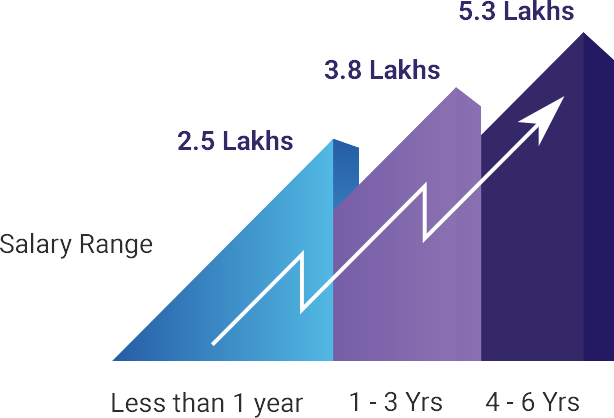
Average BIM Engineer Salary in India
Program Highlights
 Project Evaluation
Students participate in continuous project assessments and receive support at every stage. Completion of module projects increases their chances of attending more job interviews upon successfully finishing the course.
 Mentorship
Industry-experienced mentors, certified by CADD Centre ITA, guide students in their career development. Monthly scheduled sessions facilitate this support.
 Expert-led Sessions
Our Engineering, Technology, Career (ETC) sessions, led by subject-matter experts, offer learners valuable real-world insights and practical knowledge, keeping them up-to-date with the latest industry trends.
 Career Guidance
A comprehensive career guidance program assists students in assessing their skills and readiness for the job market.
 Placement Assistance
CADD Centre's 'First Job Pakka' initiative provides placement support to eligible students after completing their course successfully.
 Mini Projects
Students engage in hands-on mini projects that enhance their practical skills and provide a deeper understanding of course concepts.
 Case studies
In-depth case studies allow students to apply their knowledge to real-world scenarios, improving their analytical and problem-solving abilities.

Did you know?
Key Skills for BIM professionals in India
BIM professionals in India need a diverse skill set to navigate the architectural and construction technology landscape. Proficiency in BIM software, strong collaboration and communication skills, and a solid grasp of architectural and construction principles are essential. Problem-solving abilities, knowledge of building codes, attention to detail, and project management skills are crucial for successful project implementation. Additionally, expertise in interoperability, sustainable design, and a commitment to continuous learning enhance their adaptability to industry advancements.