

Introduction
What if technical training no longer had to be limited to a classroom, a fixed timetable and a trainer standing at a board?
Today, students can watch a software demonstration before attending a practical session, revisit a difficult concept through a video lesson and complete an online assessment from almost anywhere. This shift is changing the way technical education is delivered and creating new opportunities for technical training institutes.
As industries adopt new technologies, students increasingly expect education to be accessible, practical and relevant to the workplace. This is where digital learning is becoming an important part of modern technical education – and an interesting opportunity for entrepreneurs looking to enter the education sector.
Digital Learning in Technical Education: What Has Changed?
Traditional technical education depended heavily on classroom instruction, printed materials and scheduled practical sessions. Digital learning has added another layer to this model. Modern institutes can use digital learning tools, learning management systems, recorded video lessons, interactive content and online assessments to support students before, during and after classroom sessions.
This does not mean technology is replacing trainers. Instead, it allows trainers to spend more classroom time discussing concepts, solving problems and guiding practical work.
The growth of digital education also reflects a wider change in how people learn. Students are increasingly comfortable using online platforms, mobile devices and digital resources as part of their education. For training institutes, this creates an opportunity to offer a more flexible and engaging learning experience.
How Online Learning Is Used in Technical Training

Technical subjects often require learners to understand complex concepts and software applications. Online learning can make these topics easier to revisit and practise.
For example, online technical training can include:
- Recorded lessons that students can watch again when required
- Digital study materials and tutorials
- Live virtual classes with trainers
- Online quizzes and assessments
- Demonstrations of industry software
- Digital project resources
- Progress tracking through learning platforms
This creates flexible learning opportunities for students who may be studying alongside college, work or other commitments. For entrepreneurs, digital delivery can also provide a way to expand an institute’s reach without depending entirely on physical classroom capacity.
Learning Technical Skills Beyond the Classroom

Learning does not have to stop when a student leaves the institute.
With digital learning resources, students can continue exploring concepts, reviewing lessons and working on projects outside classroom hours. This can encourage independent learning and give students more opportunities to practise. For technical training institutes, the ability to combine classroom teaching with digital resources can also improve the overall learning journey.
A student learning design software, for instance, may benefit from watching a recorded demonstration at home and then using classroom time to complete a guided project with trainer support. The result is a learning model that connects instruction, practice and revision.
Why Practical Training Still Matters

While digital learning is transforming technical education, practical training remains essential.
Watching a software demonstration is useful, but applying the software to a real project is where understanding becomes stronger. Practical sessions allow learners to develop problem solving skills, make decisions and learn from mistakes. This is why project based learning is particularly valuable in technical education.
Instead of only learning how a tool works, students can be asked to use it to create a design, develop a model or complete a technical assignment. Software demonstration can then be used by trainers to explain specific processes and guide students through practical applications. The most effective technical institutes therefore do not have to choose between digital and classroom learning. They can use both.
Role of Hybrid Learning in Technical Institutes
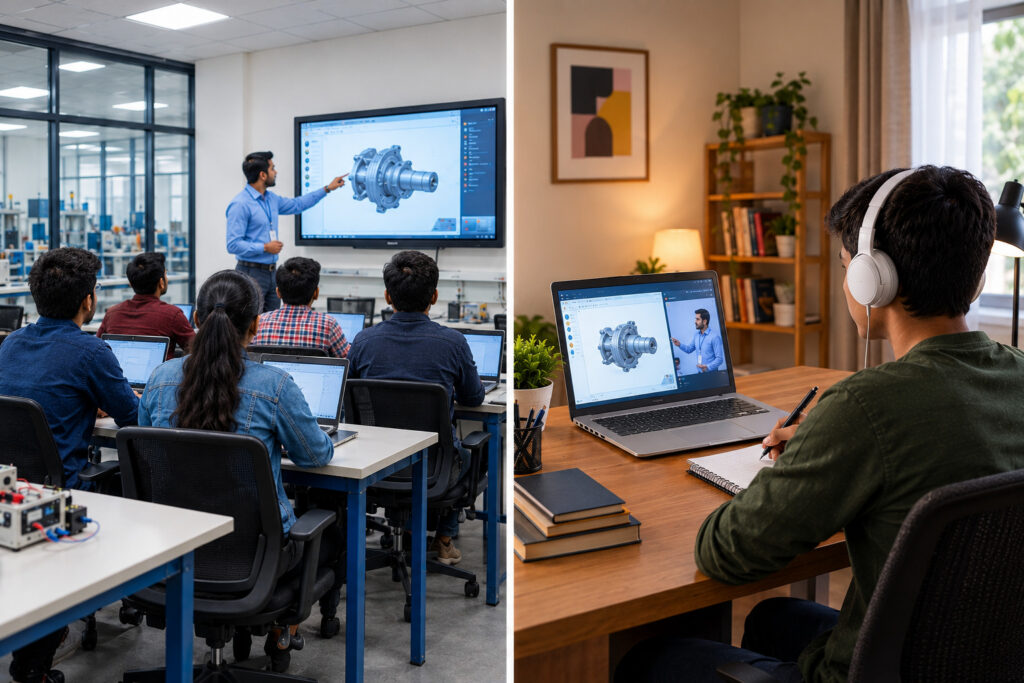
This is where hybrid education becomes important.
Hybrid learning combines classroom instruction with virtual learning and digital resources. Students may attend practical sessions at the institute while using online materials for theory, revision and additional practice.
For a technical institute, this approach can offer several advantages:
- Greater flexibility for learners
- Better access to learning materials
- More opportunities for revision
- Continued engagement outside classroom hours
- Efficient use of trainer-led sessions
- Scope to reach learners beyond the local area
For education entrepreneurs, hybrid delivery can also become part of a scalable institute model.
How Technology Is Helping Students Build Industry-Ready Skills

Employers are constantly adopting new technologies, which means technical education needs to keep pace.
Students today may need exposure to current software, digital workflows, industry practices and project-based assignments rather than relying solely on textbook knowledge. Technology can help institutes introduce updated learning content and provide students with more opportunities to practise using relevant tools.
The wider employment market is also moving towards competency-based hiring, where employers increasingly look at what candidates can actually do alongside their academic qualifications. This makes industry-oriented technical training increasingly relevant. Institutes that combine structured learning, practical projects and digital resources can help students prepare for changing workplace expectations.
What Should a Modern Technical Training Institute Offer?
A modern institute needs more than classrooms and computers. It needs an education model designed around how students learn and how industries work.
Some important elements include:
1. Learning Platforms
A reliable learning platform can provide students with access to course materials, video lessons, assessments and other digital resources.
2. Project- Based Learning
Projects allow students to apply concepts rather than simply remember them. They can also provide useful evidence of practical learning.
3. Updated Software
Technical education must evolve alongside technology. Access to relevant and updated software is therefore an important part of a contemporary training environment.
4. Blended Delivery
Combining classroom teaching with digital resources can provide students with flexibility while retaining the value of trainer-led practical education.
5. A Strong Education Brand
For entrepreneurs, partnering with an established education franchise can provide access to a structured curriculum, brand support, operational guidance and an established education model.
How CADD Centre Is Bringing Digital Learning Into Technical Training
The changing education landscape presents an opportunity not only for students but also for entrepreneurs.
CADD Centre combines technical education with technology-enabled learning to support students in areas connected to design, engineering and emerging industry requirements. Its training approach can bring together trainer-led instruction, practical learning, digital resources and project-based learning.
For an entrepreneur, building a technical training institute independently can involve developing the curriculum, establishing processes, creating learning resources and building market recognition from the ground up.
An established franchise model can provide a more structured route into the sector. For those exploring the best education franchise in India, CADD Centre offers an opportunity to enter technical education with the support of an established brand and a structured business framework.
The education sector continues to evolve, and demand for technology-oriented training creates opportunities for entrepreneurs who understand where learning is heading. For the right partner, building a CADD Centre franchise can be more than opening a training centre – it can mean becoming part of the changing technical education ecosystem.
For entrepreneurs evaluating the most profitable franchise opportunities, the focus should not only be on immediate returns. A sustainable education business also depends on market demand, brand strength, learner outcomes, operational support and the ability to adapt to new technologies.
Conclusion
Digital learning is changing technical training institutes, but it is not making traditional education irrelevant. Instead, it is creating a stronger combination of digital resources, trainer guidance and practical experience. The future of technical education is likely to be more flexible, technology-enabled and closely connected to industry requirements.
For students, this means more ways to learn. For institutes, it means new ways to deliver education. And for entrepreneurs, it creates an opportunity to participate in a growing education market. If you have been considering entering technical education, the question may no longer be whether digital learning will change the industry. The more interesting question is: will you be ready to build your education business around that change?
FAQs
1. What is digital learning in technical training?
Digital learning in technical training refers to using online platforms, video lessons, digital learning resources, virtual classes and online assessments to support technical education. It allows students to access learning materials beyond the classroom while combining digital instruction with trainer guidance and practical learning.
2. What are the main benefits for technical institutes?
Digital learning can help technical institutes offer more flexible learning, improve access to course materials and provide students with additional opportunities for revision and practice. It can also help institutes manage learning resources efficiently and extend their reach through online and hybrid education models.
3. Can advanced technical skills really be taught via live virtual classes?
Yes, many technical concepts and software-based topics can be taught through live virtual classes. Trainers can demonstrate software, explain technical processes, answer questions and guide learners in real time. However, subjects that require physical equipment or extensive hands-on work are generally better supported by practical sessions at the institute.
4. How does project-based learning work in a digital technical course?
In a digital technical course, students can receive project briefs, instructions, reference materials and software demonstrations through an online learning platform. They then work on assignments using relevant tools and submit their projects digitally. Trainers can review the work, provide feedback and guide students through improvements.
5. How do technical institutes balance online theory with hands-on practice?
Technical institutes can use a blended or hybrid education model. Online resources can be used for theory, demonstrations, revision and assessments, while classroom sessions focus on practical application, projects and trainer guidance. This combination provides flexibility without reducing the importance of hands-on learning.
6. How does CADD Centre integrate digital learning into technical training?
CADD Centre combines technology-enabled learning with trainer-led instruction and practical training. Digital resources, software demonstrations, project-based learning and technology-supported education can complement classroom sessions, helping learners understand concepts and apply them in practical situations. For entrepreneurs, this structured approach also provides an opportunity to build a technical education business through the CADD Centre franchise model.